


编者说:
布鲁德霍夫社区是一个存续超过 100 年的基督教社区,在中文世界里的介绍和资料都不多。
它诞生于纳粹德国的时期,却旗帜鲜明地表露自己和平主义和反战的理念。
接下来的这段时间,我会慢慢翻译一些社区的故事,分享给大家。

EBERHARD ARNOLD 1883–1935 埃伯哈德·阿诺德 1883-1935
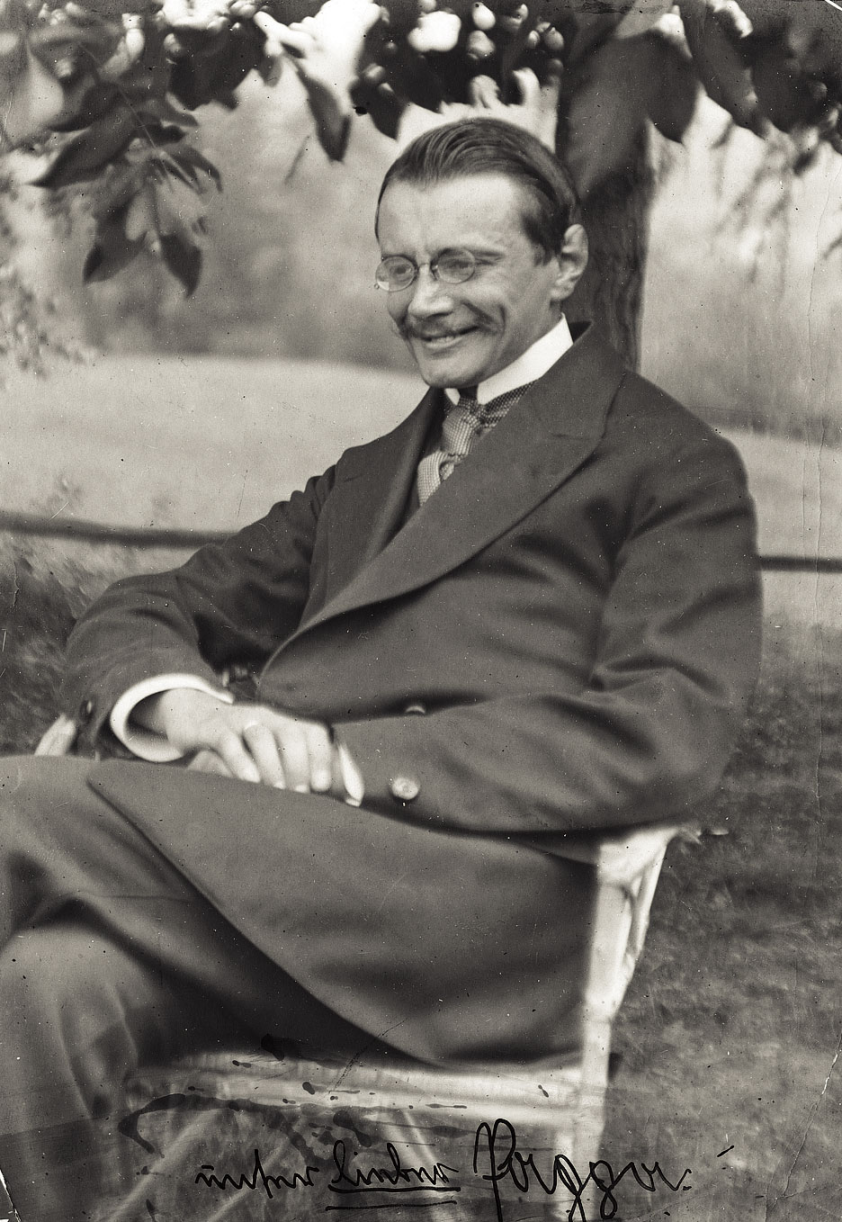
Born into a long line of German academics and himself a doctor of philosophy, Eberhard Arnold abandoned middle-class life to found the community now known as the Bruderhof. His own words describe his journey best:
埃伯哈德·阿诺德(Eberhard Arnold)出生在一个德国学者世家,自己也是一名哲学博士,他放弃了中产阶级的生活,建立了现在被称为布鲁德霍夫(Bruderhof)的社区。他用自己的话描述了他的旅程:
In my youth, I tried to lead people to Jesus through the Bible, and through addresses and discussions. But there came a time when I recognized that this was no longer enough. I began to see the tremendous power of greed, of discord, of hatred, and of the sword: the hard boot of the oppressor upon the neck of the oppressed. . . . I had preached the gospel but felt I needed to do more: that the demands of Jesus were practical, and not limited to a concern for the soul. . . . I could not endure the life I was living any longer.
在我年轻的时候,我试图通过圣经,通过演讲和讨论来带领人们相信耶稣。但有一天,我意识到这已经不够了。我开始看到贪婪、纷争、仇恨和刀剑的巨大力量:压迫者的硬靴穿在被压迫者的脖子上. . . .我已经传了福音,但觉得我需要做得更多:耶稣的要求是实际的,不局限于对灵魂的关注. . . .我再也不能忍受我现在的生活了。
His spiritual awakening had begun years earlier when, as a teenager on summer vacation at the home of “Uncle” Ernst, his mother’s cousin, he had read the New Testament with fresh eyes. Ernst, a Lutheran pastor who had lost his church position after siding with the poor weavers of the region during a labor dispute, impressed him deeply. By the time he returned home, Eberhard was burdened with a new consciousness of his privileges and the plight of the impoverished.
他在精神上的觉醒早在几年前就开始了,那时他十几岁,在他母亲的堂兄恩斯特“叔叔”的家里过暑假,他用新的眼光读了《新约》。恩斯特是路德教会的牧师,在一次劳资纠纷中站在该地区贫穷的织工一边后,他失去了教会的职位,这给他留下了深刻的印象。当他回到家时,埃伯哈德对自己的特权和穷人的困境有了新的认识。
The next years were tumultuous. He volunteered with the Salvation Army, started an intensive Bible study, and neglected his secondary school studies to such an extent that his desperate parents finally sent him to boarding school. When he graduated he clashed with them over the next step: Eberhard wanted to study medicine, while his father insisted on theology. Eberhard yielded.
接下来的几年是动荡的。他在救世军做志愿者,开始强化圣经学习,忽略了中学的学习,以至于他绝望的父母最终把他送到寄宿学校。毕业后,他和父母在下一步的问题上发生了冲突:埃伯哈德想学医学,而他的父亲坚持要学神学。埃伯哈德屈服了。
This did not lead to the respectable career in the state church his father hoped for, however, as he was ultimately barred from sitting for his final exams. Through his study of the Bible and the influence of the evangelical revivalist movement, Eberhard came to believe that infant baptism was not valid and was re-baptized as an adult. This decision disqualified him from completing his degree. His parents disowned him, and the father of his fiancée, Emmy von Hollander, denied him permission to marry her until he had successfully defended another doctoral dissertation.
然而,这并没有给他带来父亲所希望的在国家教会中受人尊敬的职业生涯,因为他最终被禁止参加期末考试。通过对圣经的研究和福音复兴运动的影响,埃伯哈德开始相信婴儿洗礼是无效的,并在成年后重新受洗。这个决定使他丧失了完成学位的资格。他的父母与他断绝了关系,他的未婚妻埃米·冯·霍兰德(Emmy von Hollander)的父亲不允许他娶她,直到他成功地为另一篇博士论文辩护。
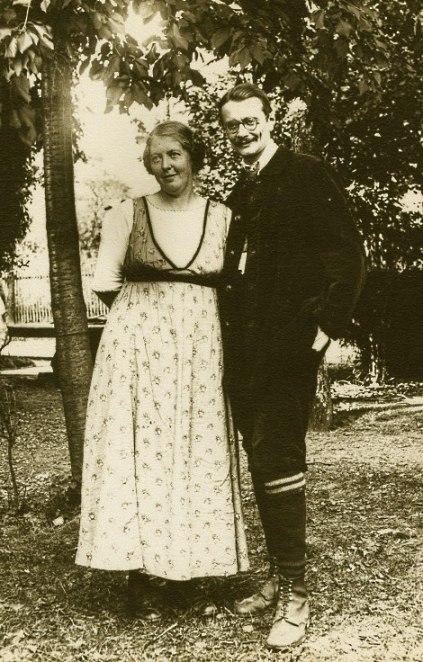
Eberhard switched his course of study to philosophy, completed a thesis on Nietzsche, and married Emmy in 1909. Meanwhile, he was making his voice heard as leader of the local chapter of the Student Christian Movement. The newlyweds moved from one city to another, following his work as a public speaker, while hosting gatherings in their home that attracted a lively and diverse attendance, from pious housewives to communist revolutionaries.
埃伯哈德转而学习哲学,完成了一篇关于尼采的论文,并于 1909 年与埃米结婚。与此同时,他作为学生基督教运动当地分会的领袖发出了自己的声音。这对新婚夫妇从一个城市搬到另一个城市,跟随他作为一名公众演说家的工作,同时在家里举办聚会,吸引了从虔诚的家庭主妇到共产主义革命者等形形色色的人参加。
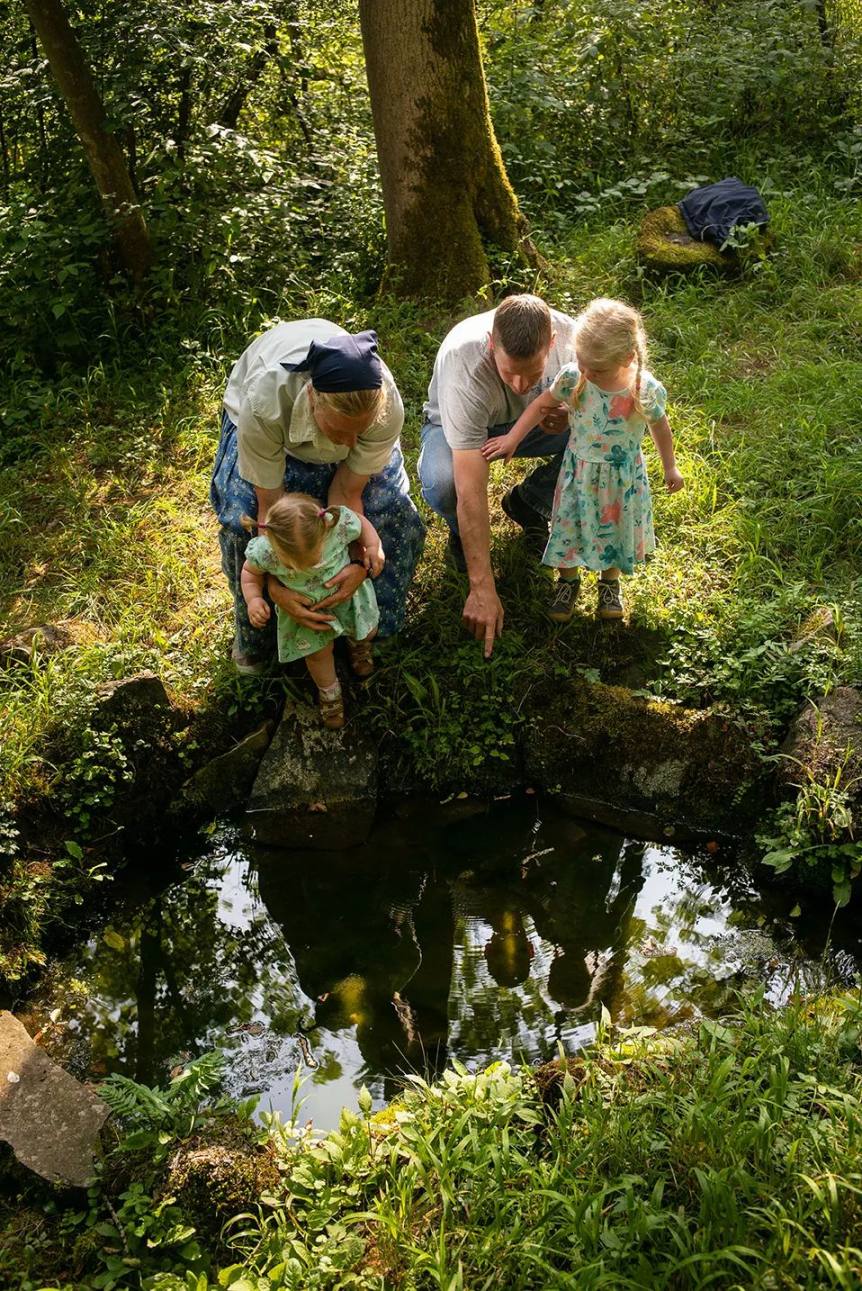
At Sannerz in Germany, site of the first Bruderhof and today home to about twenty, including Steve and Mim and their daughters
在德国的 Sannerz,第一个 Bruderhof 的所在地,史蒂夫和米姆以及他们的女儿。
The First World War led the couple to read the Bible in a new light. Counseling wounded soldiers in an army hospital, Eberhard was shattered by what he heard and saw. Formerly an energetic advocate of the German cause, he embraced pacifism as truer to the gospel.
第一次世界大战使这对夫妇对圣经有了新的认识。埃伯哈德在一家军队医院为受伤的士兵提供咨询,他被这一切的所见所闻震惊了。他以前是德国事业的积极倡导者,他认为和平主义更符合福音。
The end of the war in 1918 heralded little in the way of peace: there were strikes, assassinations, revolutions, and counterrevolutions, and finally the haphazard birth of the Weimar Republic. In Eberhard’s words, the hour demanded a discipleship that “transcended merely edifying experiences.” Increasingly he pondered the evils of mammon, the god of money and material wealth. “Most Christians have completely failed in the social sphere and have not acted as brothers to their fellow man. They have risen up as defenders of money and capitalism,” he said. An alternative emerged, simple but all-consuming:
1918 年战争的结束几乎没有预示和平的到来:罢工、暗杀、革命和反革命层出不穷,最后是魏玛共和国的偶然诞生。用埃伯哈德的话来说,这个时刻需要一种“超越仅仅是教化经验”的门徒训练。他越来越多地思考财神(mammon)的罪恶,财神是金钱和物质财富之神。“大多数基督徒在社会上完全失败了,没有像兄弟一样对待他们的同胞。他们已经崛起为金钱和资本主义的捍卫者。”另一种选择出现了,虽然简单,但耗费巨大:
Jesus says, “Do not gather riches for yourself.” That is why the members of the first church in Jerusalem distributed all they had. Love impelled them to lay everything at the apostles’ feet; and the apostles distributed these goods to the poor.
Christ’s love calls us to give up our possessions, too. That is the only way to help the world; it strikes at the root of our selfishness, making it possible for us to live in harmony – to live a life of love and justice and community.
耶稣说:“不要为自己积聚财富。”所以耶路撒冷第一教会的会众,把他们所有的,都分给他们。他们出于爱心,把一切都放在使徒脚前;使徒就把这些财物分给穷人。
基督的爱也呼召我们放弃我们的财产。这是帮助世界的唯一途径;它打击了我们自私的根源,使我们能够和谐地生活——过一种充满爱、正义和社区的生活。
As Emmy wrote in an unpublished memoir:
正如艾米在一本未出版的回忆录中写道:
Social contradictions such as the fact that one person can enjoy the plenty of life without sweating, while another does not have bread for his children despite working like a slave, occupied us more and more. Through reading the Bible, we realized that this is not God’s will.
From the outset of our friendship, Eberhard and I had wanted to give our lives in service to others. That was our primary concern. So it was perhaps natural that we now found ourselves joining with people who were dissatisfied and were challenging public life and human relationships with the old slogans of freedom, equality, and fraternity. These ideals were drawing people from all walks of life; and all of them were struggling to find God’s will, even if few would have expressed it like that. . . .
一个人可以不厌其烦地享受丰富的生活,而另一个人像奴隶一样工作却没有面包给他的孩子,这样的社会矛盾越来越多地占据了我们。通过阅读圣经,我们意识到这不是上帝的旨意。
从我们的友谊开始,埃伯哈德和我就想为他人服务。这是我们最关心的。因此,很自然地,我们现在发现自己加入了那些不满并以自由、平等和博爱的旧口号挑战公共生活和人际关系的人的行列。这些理想吸引着各行各业的人;他们都在努力寻找上帝的旨意,即使很少有人会这样表达. . . .
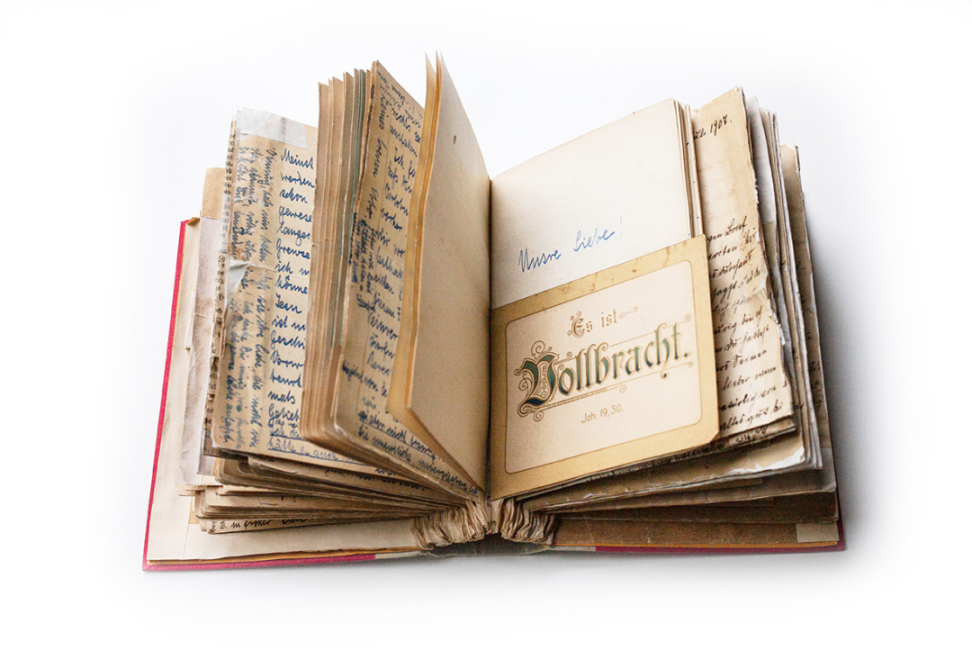
Eberhard and Emmy Arnold exchanged hundreds of letters during their three-year engagement. Emmy later had the letters bound into nine volumes.
埃伯哈德和艾米·阿诺德在他们订婚的三年里交换了数百封信。埃米后来把这些信装订成九卷。
At a series of open evenings in our house we read the Sermon on the Mount and were so overwhelmed by it that we decided to completely rearrange our lives according to it, cost what it may. Everything written there seemed to have been spoken directly to us: what Jesus says about justice, about hungering for righteousness, loving one’s enemies, and finally, about actually doing God’s will.
在我们家里的几个开放的晚上,我们读了《登山宝训》,被它深深打动,于是我们决定无论付出什么代价,都要完全按照它来重新安排我们的生活。书中所写的一切似乎都是直接对我们说的:耶稣所说的关于正义,关于渴望正义,关于爱自己的敌人,最后,关于真正遵行上帝的旨意。
But Eberhard’s radical pacifist and economic views were incompatible with his employer, Die Furche, the publishing house of the Student Christian Movement where he had worked since 1915. In early 1920, Eberhard gave notice and, in June of the same year, the Arnolds took the plunge. Surrendering their life insurance policy for cash and leaving their comfortable Berlin home, they moved with their five children to Sannerz, a poor farming village, where they began living in full community with several other like-minded seekers, including Emmy’s sister Else.
但埃伯哈德激进的和平主义和经济观点与他的雇主 Die Furche(学生基督教运动的出版社)格格不入。埃伯哈德自 1915 年以来一直在这家出版社工作。1920 年初,埃伯哈德发出了通知,同年 6 月,阿诺德夫妇决定冒险一试。他们放弃了人寿保险,离开了柏林舒适的家,带着五个孩子搬到了一个贫穷的农业村庄桑涅茨(Sannerz)。在那里,他们开始与其他几个志趣相投的人一起生活,其中包括艾米的妹妹埃尔瑟(Else)。
Starting such a community, as Emmy wrote later, required a leap of faith:
埃米后来写道,创建这样一个社区需要一个信念的飞跃:
We had no real financial basis of any kind for realizing our dreams. Not that it made a difference. It was time to turn our backs on the past, and start afresh – to burn all our bridges, and put our trust entirely in God, like the birds of the air and the flowers of the field. This trust was to be our foundation – the surest foundation, we felt, on which to build.
我们没有任何实现梦想的经济基础。这并没有什么不同。是时候抛弃过去,重新开始了——烧掉我们所有的桥梁,完全信任上帝,就像天上的鸟儿和田野里的花朵一样。这种信任将成为我们的基础——我们认为是最可靠的基础,我们可以在此基础上发展事业。
The Arnolds were hardly alone in their thinking: their fledgling community was one of dozens of similar settlements that had sprung up across Germany at the time, attracting young people disillusioned with both bourgeois piety and social inequality. More than a thousand guests descended on the community in Sannerz during its first year.
阿诺德夫妇并不是唯一一个有这种想法的人:他们刚刚起步的社区是当时德国各地涌现的数十个类似定居点之一,吸引了对资产阶级虔诚和社会不平等幻想破灭的年轻人。第一年,就有一千多名客人来到了桑纳茨的社区。
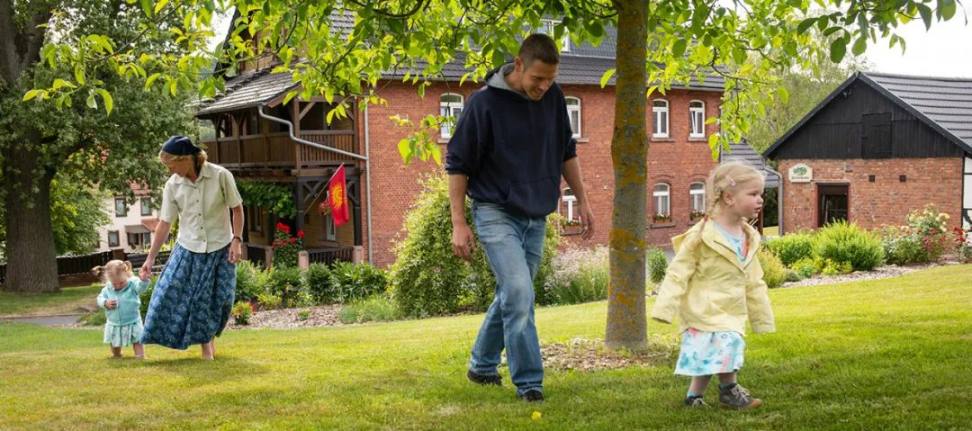
The Bruderhof re-acquired the Sannerz House in 2002. The original Bruderhof community was here from 1920 to 1927.
Bruderhof 于 2002 年重新收购了 Sannerz House。最初的布鲁德霍夫社区从 1920 年到 1927 年一直在这里。
From his new home base, Eberhard soon resumed publishing with the mission, as he wrote, of “allowing the gospel to work in creation, producing literary and artistic work in which the witness of the gospel retains the highest place while at the same time representing all that is true, worthy, pure, beautiful and noble.” He saw Sannerz and other exemplars of voluntary Christian community as beacons of hope – models that could inspire other attempts at social and economic renewal. This would surely happen, he believed, once people’s eyes were opened to the possibilities of brotherhood and the joy of sharing everything in common, as opposed to competing for every last coin. As he said at a lecture in 1929:
在他的新家,埃伯哈德很快恢复了出版的使命,正如他所写的那样,“让福音在创造中发挥作用,创作文学和艺术作品,其中福音的见证保持最高的地位,同时代表所有真实,有价值,纯洁,美丽和高尚的东西。”他把桑纳兹和其他自愿基督教社区的典范视为希望的灯塔,这些典范可以激励其他社会和经济复兴的尝试。他相信,一旦人们睁开眼睛,看到兄弟情谊的可能性,看到分享一切的快乐,而不是为每一分钱而竞争,这肯定会发生。正如他在 1929 年的一次演讲中所说:
People tear themselves away from home, parents, and career for the sake of marriage; they risk their lives for the sake of wife and child. In the same vein, people must be found who are ready to sacrifice everything for the sake of this way, for the service of all people.
Community is alive wherever these small bands of people meet, ready to work for the one great goal, to belong to the one true future. Already now we can live in the power of this future; already now we can shape our lives in accordance with God and his kingdom. This kingdom of love, free of mammon, is drawing near. Change your thinking radically so that you will be ready for the coming order!
人们为了婚姻而远离家庭、父母和事业;他们冒着生命危险保护妻儿。同样地,必须找到愿意为了这种方式,为了所有人的服务而牺牲一切的人。
只要这些小团体聚集在一起,随时准备为一个伟大的目标而努力,为一个真正的未来而奋斗,社区就充满活力。现在我们已经可以生活在未来的力量中;现在我们就可以按照神和他的国度来塑造我们的生命。这个爱的王国,没有贪欲,正在临近。彻底改变你的想法,这样你就会为即将到来的感召做好准备!
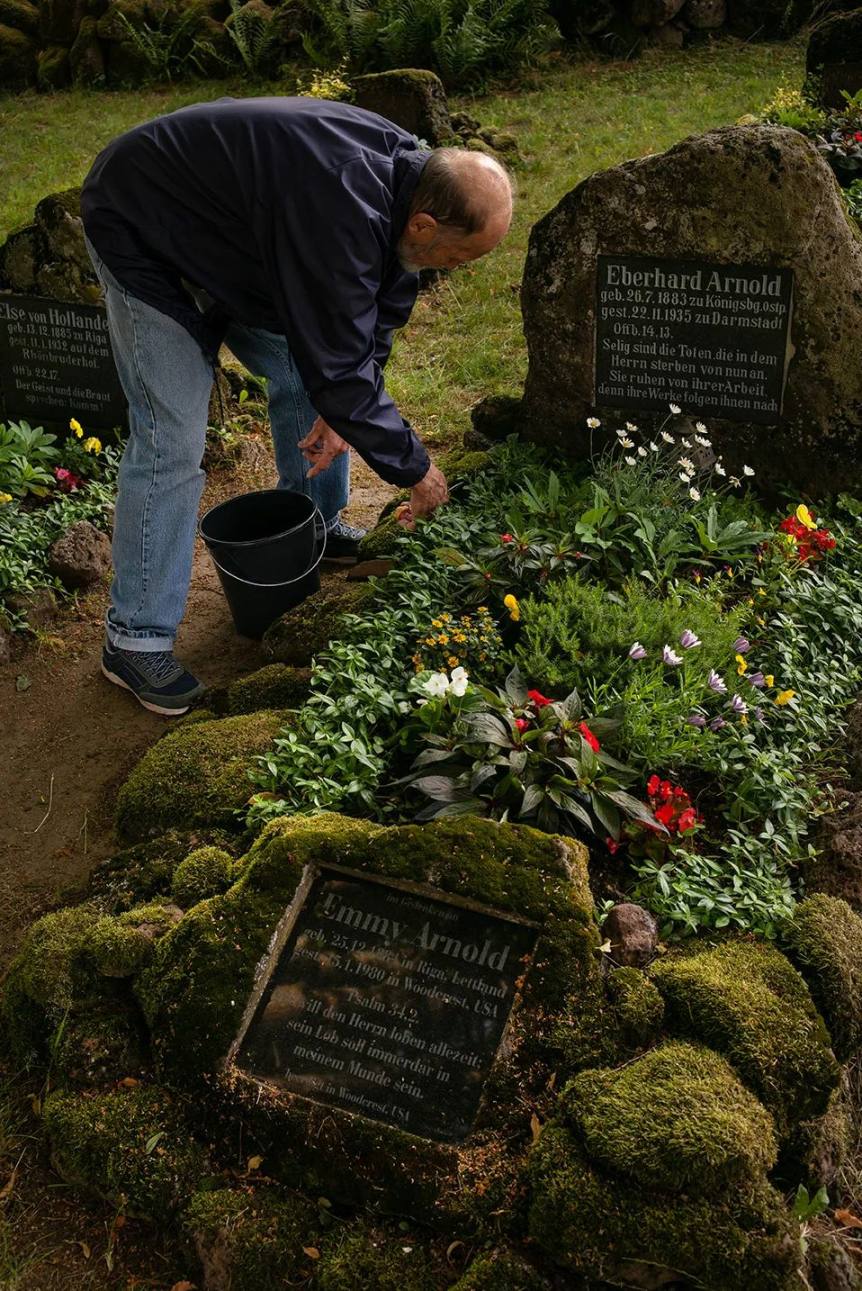
Hans Brinkmann tends the grave of Eberhard Arnold in the community burial ground near Sannerz, Germany.
汉斯·布林克曼在德国桑纳茨附近的社区墓地照料埃伯哈德·阿诺德的坟墓。
By this time the community had grown, its ranks expanded by homeless war veterans and single mothers, orphans and day laborers, people with disabilities and mental illness, anarchists and communists, Christians and Jews. To accommodate this new influx, it resettled on a farm in the Rhön hills.
到这个时候,社区已经发展壮大,无家可归的退伍军人和单身母亲、孤儿和日工、残疾人和精神病患者、无政府主义者和共产主义者、基督徒和犹太人都加入了社区。为了适应这些新涌入的人,他们在 Rhön 山上的一个农场定居下来。
Meanwhile, Eberhard had become increasingly interested in the example of the Anabaptists, who emphasized unity, sharing of possessions, nonviolence, and the church as a “city on a hill.” He learned that one branch of this movement, started by Jakob Hutter in the sixteenth century, had existing communities in North America, and he reached out to establish a relationship with them.
与此同时,埃伯哈德对再洗礼派的例子越来越感兴趣,他们强调团结、分享财产、非暴力和教会是“山上的城市”。他了解到,这个运动的一个分支,由雅各布·哈特在 16 世纪发起,在北美有现有的社区,他伸出手来与他们建立关系。
The rise of National Socialism in the 1930s presented Eberhard and the other members of the Bruderhof with the challenge of remaining faithful in an increasingly hostile state. The pacifism of the early Anabaptist movement remained a core principle of their identity, despite the persecution they knew it would bring. This also meant that, from the very beginning, they distanced themselves from the regime. The Bruderhof’s connections to Jewish communities also strengthened their resolve against the anti-Semitic aims of the Third Reich.
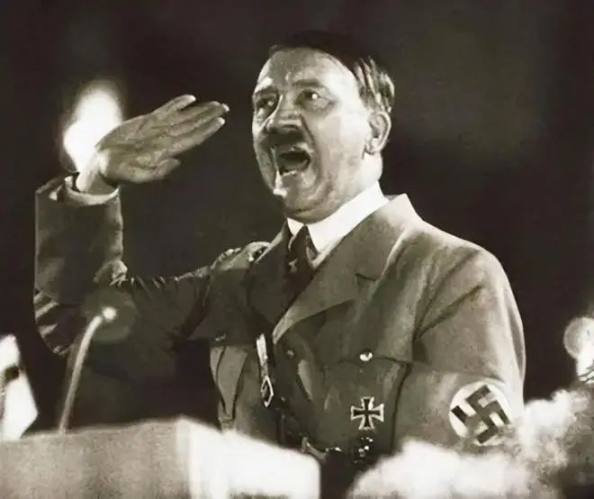
20 世纪 30 年代纳粹的兴起给埃伯哈德和布鲁德霍夫的其他成员带来了在一个日益敌对的国家保持忠诚的挑战。早期再洗礼派运动的和平主义仍然是他们身份认同的核心原则,尽管他们知道这会带来迫害。这也意味着,从一开始,他们就与这个政权保持距离。布鲁德霍夫社区与犹太社区的联系也增强了他们反对第三帝国反犹目标的决心。
The first of several Gestapo raids occurred in 1933. Eberhard was not intimidated, and sent off reams of documents to the local Nazi officials, explaining his vision of a Germany under God. He even wrote to Hitler, urging him to renounce the ideals of National Socialism and to work instead for God’s kingdom – and sending him a copy of his book Innerland, which spoke forcefully against the demonic spirits that animated German society at the time. Not surprisingly, this letter was never answered.
盖世太保的第一次突袭发生在 1933 年。埃伯哈德没有被吓倒,他向当地的纳粹官员发送了大量文件,解释了他对上帝统治下的德国的看法。他甚至写信给希特勒,敦促他放弃国家社会主义的理想,转而为上帝的王国而工作,并寄给他一本自己的书《内陆》(Innerland),该书强烈反对当时活跃在德国社会的恶魔精神。不出所料,这封信从未得到回复。
Following the raid, Bruderhof parents quietly began the process of evacuating the community’s children to Liechtenstein. When a Nazi-sanctioned teacher showed up to take over the school in 1934, she found no pupils waiting for her. With hostilities in Germany rising, the whole community soon moved to Liechtenstein, but did not stay for long – from there they left for England, and later Paraguay.
突袭之后,布鲁德霍夫的父母们悄悄地开始将社区的孩子们疏散到列支敦士登。1934 年,当一名纳粹认可的教师来接管这所学校时,她发现没有学生在等她。随着德国的敌对情绪加剧,整个社区很快就搬到了列支敦士登,但没有呆太久——他们从那里出发去了英国,后来又去了巴拉圭。
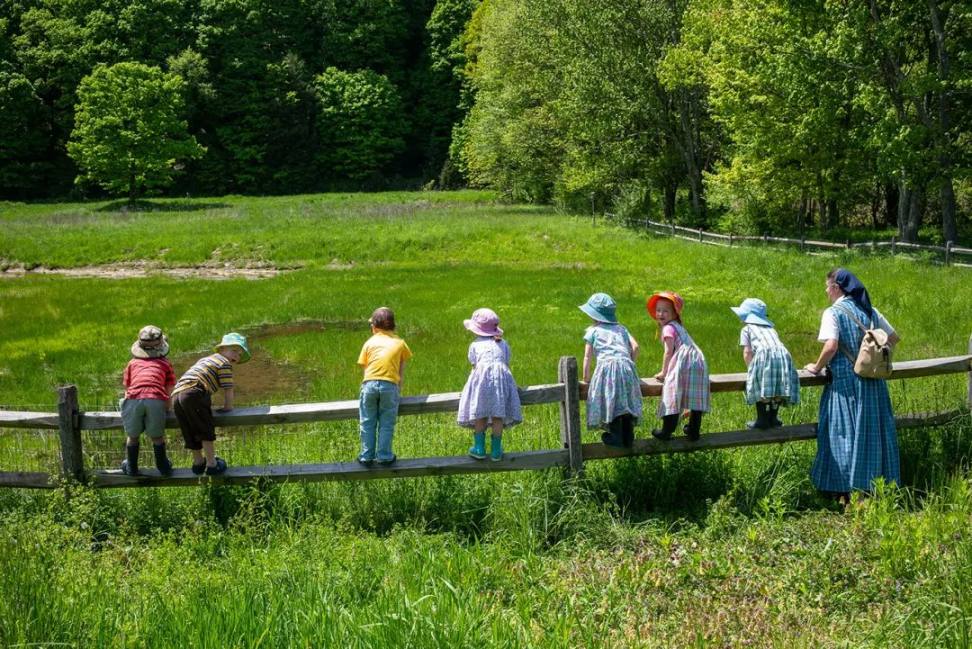
Eberhard Arnold’s original vision was for a community centered around children.
埃伯哈德·阿诺德最初的设想是建立一个以儿童为中心的社区。
Eberhard did not live to shepherd them through these changes, however. His death came suddenly in 1935, the result of complications following the amputation of a poorly set broken leg. Under extremely difficult circumstances, others took up the work he had begun.
然而,埃伯哈德没能活着带领他们度过这些变化。1935 年,他突然去世,死于截肢后的并发症。在极其困难的情况下,其他人接替了他的工作。
Remembered a century later, his “voice of one crying in the wilderness” delivers “a wakeup call for the religiously sedated and socially domesticated Christendom of the Western world,” writes Jürgen Moltmann, a German theologian. “He saw down to the root of things, leading to uncompromising decisions in the discipleship of Jesus between the old, transient world and the future of God’s new world.”
德国神学家jr·莫尔特曼(jrgen Moltmann)写道,一个世纪后,人们想起了他“在荒野中哭泣的声音”,“为西方世界的宗教平静和社会驯化的基督教世界敲响了警钟”。“他看透了事物的根源,在耶稣的门徒身份中,在旧的、短暂的世界和上帝未来的新世界之间做出了毫不妥协的决定。”
“It may seem strange that such an insignificant group could experience such lofty feelings of peace and community, but it was so,” Eberhard wrote shortly before his death. “It was a gift from God. And only one antipathy was bound up in our love – a rejection of the systems of civilization; a hatred of the falsities of social stratification; an antagonism to the spirit of impurity; an opposition to the moral coercion of the clergy. The fight that we took up was a fight against these alien spirits. It was a fight for the spirit of God and Jesus Christ.”
埃伯哈德在去世前不久写道:“这样一个不起眼的群体却能体验到如此崇高的和平与社区感,这似乎很奇怪,但事实就是如此。”“这是上帝的礼物。我们的爱中只有一种对抗——对现代制度的排斥;对虚假的社会分层的憎恨;对不洁精神的对抗;反对神职人员的道德强制。我们的战斗是为了对抗这些异端的灵魂。这是为上帝和耶稣基督的精神而战。”
「绽芽」,一个以「分享世界多样性,构建未来可能性」为使命的传媒品牌

【免责声明】市场有风险,投资需谨慎。本文不构成投资建议,用户应考虑本文中的任何意见、观点或结论是否符合其特定状况。据此投资,责任自负。